Bill and I say come on down to New Orleans for the 2026 annual Faulkner Society Festival, where the manuscript for my newest novel, JACKSON, is on the shortlist for the Novel Prize. It’s all happening September 25-27 at the Hotel Provincial, Beauregard-Keyes House, and the Ursuline Convent Chapel and Gardens in the French Quarter. … Read more
Here’s wishing everyone good health, happiness, and love for 2026. And to help you get started, here are Woody Guthrie’s New Year’s resolutions for 1943. Cheers!
Good news Monday. I’m happy to share that my newest novel, JACKSON, has been chosen as a finalist for the Association of Writers and Writing Programs’ 2025 Prize for the Novel. The blurb is below, if you’re curious. JACKSON is a modern-day Frankenstein tale set against the backdrop of horrific, real-life brain implant experiments conducted … Read more
Good news Tuesday: I’ve just signed a film development deal for my 2013 novel THE NIGHT OF THE COMET. The producer is Matt Thompson, who worked for years with John Wells, whose credits include ER, The West Wing, and August: Osage County, among many other film and TV projects. Many thanks to super agent Lisa … Read more
From the BBC: Apollo 11 Moon Landing: Everything You Need to Know IMAGE SOURCE, NASA Apollo 11 Moon landing: Everything you need to know It’s 55 years since US astronauts Buzz Aldrin and Neil Armstrong became the first people to walk on the Moon. Neil Armstrong stepped onto the surface of the Moon on 20 … Read more
Comet ZTF, which I’ll call “The Green Monster,” is coming soon to a sky near you. This is its first return since the Ice Age, so if you miss it now, you’ll have to wait another 50,000 years to see it again. In the US, you might spot it before dawn on Saturday, Jan … Read more
This collection shows 99 planetary nebulae (and “Gomez’s Hamburger,” a protoplanetary disk) imaged by the Hubble Space Telescope. Copyright Hubble / ESA / NASA; processed by Judy Schmidt CC BY 2.0
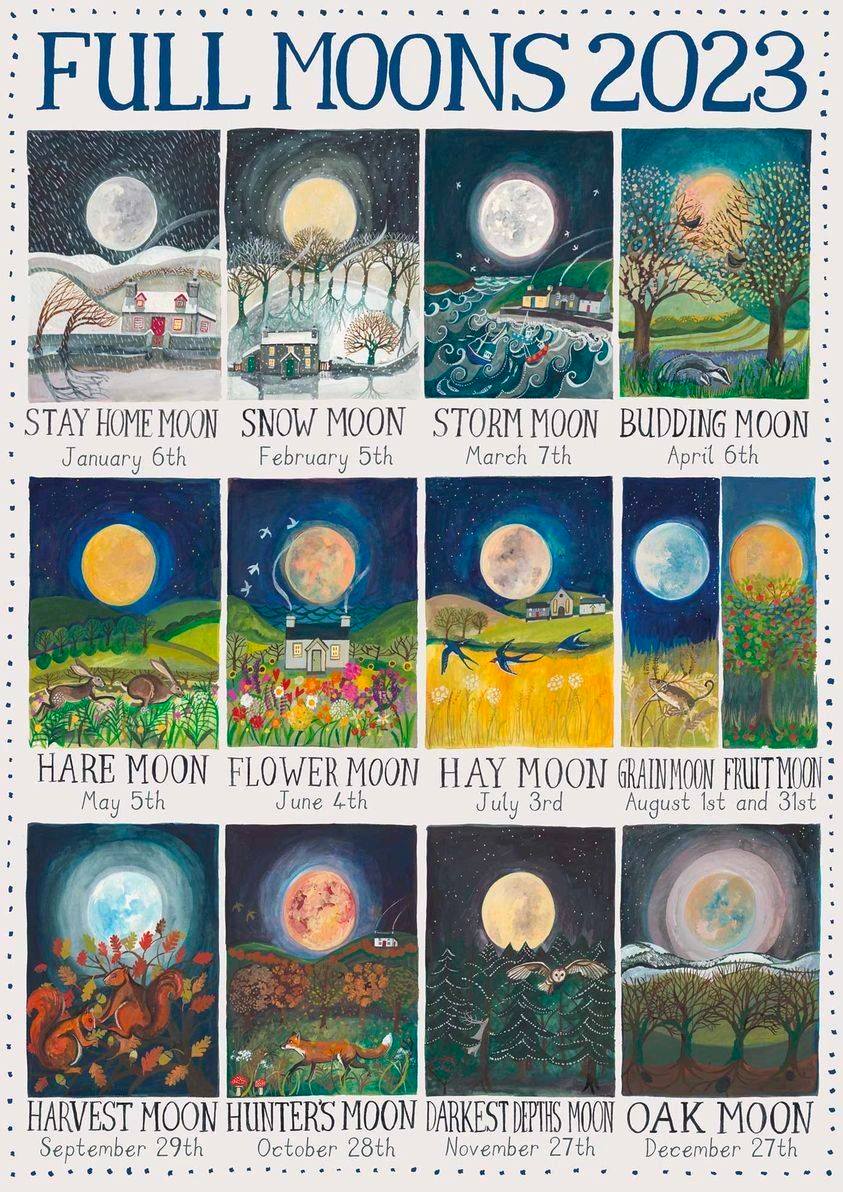
Catch the first full Moon of 2023 this weekend, January 6-8. It goes by many different traditional names–the Wolf Moon, the Cold Moon, the Hard Moon, the Great Moon, the Spirit Moon. Here’s a new favorite, though: the Stay Home Moon.
Hope you’ll enjoy it, wherever you are.
From Driftwood Designs, illustrated by Lizzie Spikes in Aberystwyth and printed in Wales.
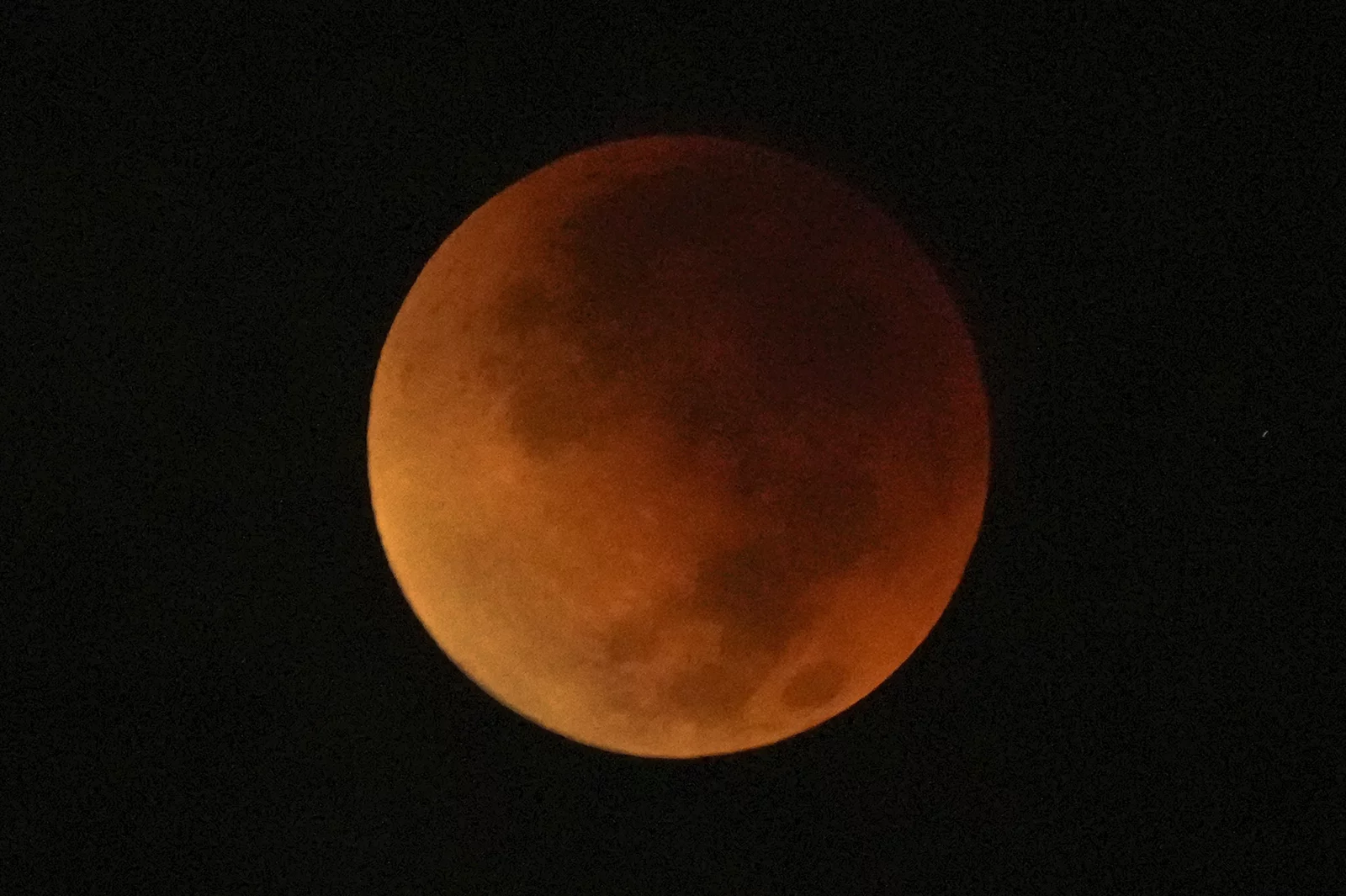
Tuesday, November 7, a total lunar eclipse will be visible in North America, Central America, Colombia, and western Venezuela and Peru. It’ll begin just before sunrise and will last about an hour and a half.
The phenomenon causes the moon to appear red, often nicknamed a “blood moon.” During a lunar eclipse, what little sunlight that’s left passes through Earth’s atmosphere to get to the moon. The more cloudy or dusty the atmosphere is, the redder the moon looks.
“It’s as if all the world’s sunrises and sunsets are projected onto the Moon,” NASA said.
A total lunar eclipse is happening Tuesday — and it won’t happen again for 3 years
NPR
Nov. 7, 2022
Ayana Archie
A total lunar eclipse is happening Tuesday, and it might be a good time to catch a peek, because the next one isn’t for three years.
The initial phase of the eclipse begins at 3:02 a.m. ET, according to NASA. The partial eclipse then begins at 4:09 a.m. ET, when to the naked eye, it looks like a bite is being taken out of the moon. The lunar disk enters totality at 5:17 a.m. ET and will last for about an hour and a half.
People in North America, Central America, Colombia, and western Venezuela and Peru will be able to see the eclipse in totality. Those in Alaska and Hawaii will be able to see all stages of the eclipse.
For the best view, it is best to be in a dark area with little light pollution.
A lunar eclipse happens when the sun, Earth and moon align. During a full lunar eclipse, the moon falls completely in the Earth’s shadow.
The phenomenon causes the moon to appear red, often nicknamed a “blood moon.” During a lunar eclipse, what little sunlight that’s left passes through Earth’s atmosphere to get to the moon. The more cloudy or dusty the atmosphere is, the redder the moon looks.
“It’s as if all the world’s sunrises and sunsets are projected onto the Moon,” NASA said.
The next full lunar eclipse will occur on March 14, 2025, but there will be partial lunar eclipses before then, according to NASA.
This Wednesday the moon will be at its closest point to the Earth for the year–the “Buck Supermoon.” More info below from Space.com.
Don’t Miss the Biggest ‘Supermoon’ of the Year on July 13
On Wednesday (July 13), the moon will arrive at its closest point to the Earth for 2022.
A supermoon in the dusk sky. (Image credit: Getty)
By Joe Rao
Space.com
On Wednesday (July 13) at 5 a.m. EDT (09:00 GMT), the moon will arrive at its closest point to the Earth for 2022: a perigee distance of 221,994 miles (357,264 kilometers) away.
Nine hours and 38 minutes later, the moon will officially turn full. Though full moon theoretically lasts just a moment, that moment is imperceptible to ordinary observation, and for a day or so before and after most will speak of seeing the nearly full moon as “full”: The shaded strip is so narrow, and changing in apparent width so slowly, that it is hard for the naked eye to tell whether it’s present or which side it is on.
So, when the moon shines down on your neighborhood on Wednesday night, keep this in mind: What you’re looking at is not precisely a full moon, but a waning gibbous moon, already many hours past its stage of full illumination. . . .